Group Birdwatching Tips
Practical tips for group birdwatching: group size, leader roles, pacing, communication signals, sharing optics, inclusion, and keeping noise low on shared walks.
Contents
- Why group size decides the walk
- The group leader role and pacing
- Group communication without noise
- Group birding etiquette on the trail
- Sharing optics and field gear
- Welcoming newcomers and friends
- Inclusive group outings and mixed abilities
- Wildlife watching for groups beyond birds
- Questions About Group Birdwatching
- How do I start a birdwatching group?
- What can I do when a birding group is too large?
- What signals work for group communication on a bird walk?
- How do I introduce friends to birding?
- How do I make a birding group inclusive?
- How do we share binoculars in a group?
Group birdwatching works when the group stays small, moves at one pace and talks in signals instead of voices. A bird walk leader sets the route, the spacing and the quiet rules before the first bird appears. These tips cover group size, etiquette, communication and inclusion so friends and newcomers can share the birds without disturbance.
- Keep birding groups small enough for one leader to see every person and every bird.
- Agree on hand signals and a whistle call before the walk starts.
- Place the slowest walkers at the front so the group never stretches apart.
- Share optics by handing binoculars along rather than crowding one viewpoint.
- Choose flat, accessible trails when the group has mixed abilities.
Why group size decides the walk
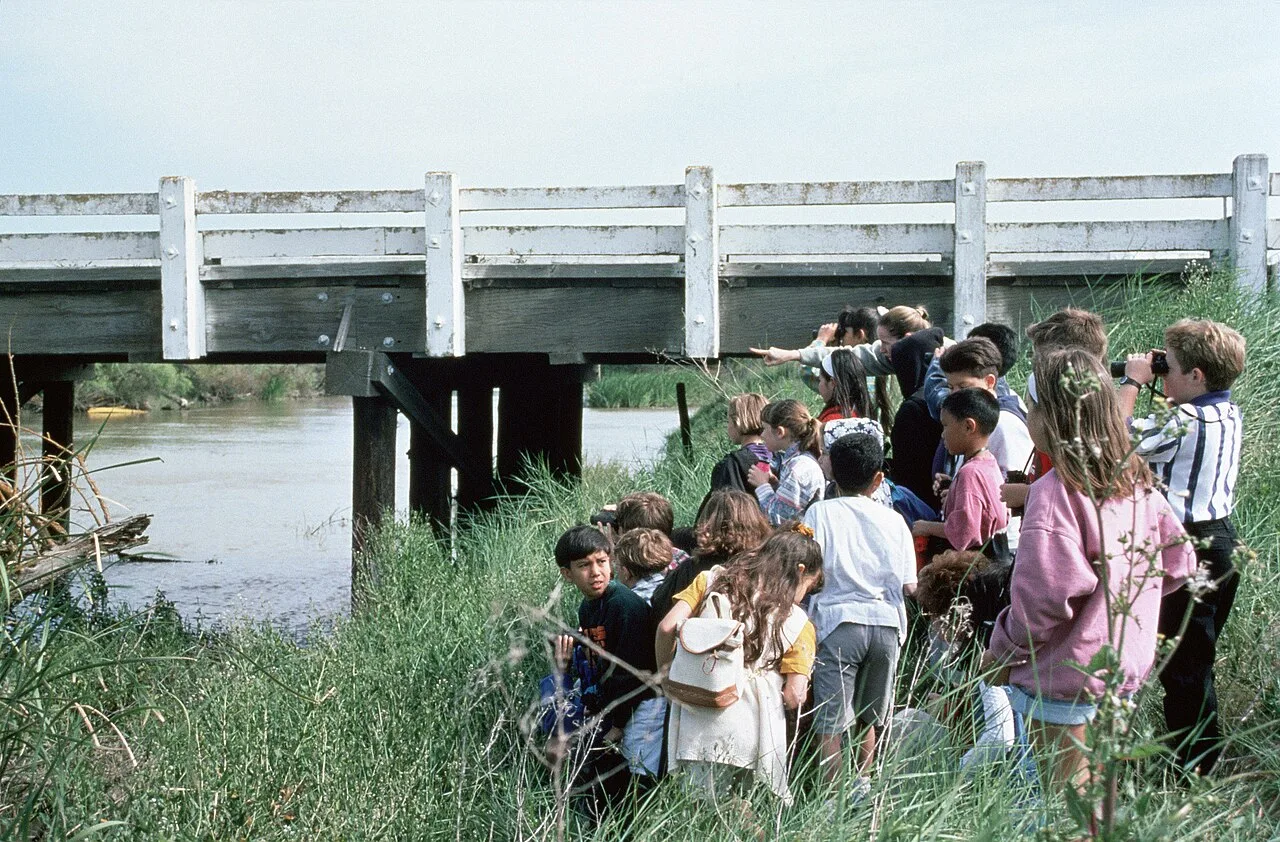
Group size is the first decision in group birdwatching because a crowd of watchers spooks birds and blocks trails. A birding group larger than a leader can see and hear becomes hard to steer and hard to keep quiet. Many leaders split a large birding group into smaller bands that walk the same route a few minutes apart.
A workable group size for birding depends on the habitat, the width of the trail and the number of leaders. Open prairie and wide tracks carry more watchers than a narrow woodland path. Decide the limit before you advertise the outing, and count heads at the meeting point.
For large group birdwatching, assign one leader per small band and give each band a name or a color. Bands then regroup at set points to compare notes. Coordinating large birding groups this way keeps noise and disturbance low while everyone still sees the birds.
- Split into bands of a size one leader can manage.
- Give each band a name so people find their group.
- Stagger starts along the same route.
- Regroup at a marked point to share sightings.
The group leader role and pacing
The bird walk leader sets the route, the pace and the quiet zones for the group. This role is not a lecture; the leader points out birds and lets the group watch. Clear group leader roles stop confusion when a bird appears and everyone moves at once.
Group pace should suit the slowest walker, who belongs at the front of the line. Fast walkers at the back bunch up and push the pace, so place them behind the leader instead. A steady group pace gives everyone time to raise binoculars and find the bird.
The leader also judges when the group has had enough of one spot. Moving on too soon cuts sightings short; staying too long tires the group. Group fieldcraft means reading the group and choosing the moment to walk on.
- Set the route and the meeting point before the walk.
- Put the slowest walkers at the front.
- Pause often so everyone can find the bird.
- Call the move to the next stop clearly.
Group communication without noise
Group communication on walks works best through agreed signals rather than shouted words. Hand signals and a whistle or call signal carry down a line of watchers without scaring birds. Agree the signals before the walk, when everyone can see and hear them.
A raised open hand can mean stop, and a pointing arm can mean a bird ahead. A soft whistle can gather the group, and a single note can mean quiet. Keep the set small so newcomers remember them.
Group messaging before the outing shares the meeting time, the route and what to bring. On the walk, keep phone talk brief and step away from the group. Quiet talk in a low voice is fine when no bird is close.
| Signal | Meaning |
|---|---|
| Open hand raised | Stop and stay quiet |
| Arm pointing | Bird ahead, look where shown |
| One soft whistle | Gather at the leader |
| Hand cupped to ear | Listen for a call |
| Waving both hands | Move on to the next stop |
Group birding etiquette on the trail
Group birding etiquette protects both the birds and the people walking behind you. Stay on the trail, keep voices low and leave gaps so others can see past you. Bird walk etiquette also means not stepping in front of a raised pair of binoculars.
Spacing keeps the group from bunching at a sighting and blocking the path. Leave a few steps between pairs of watchers so each person has room to lift optics. When someone finds a bird, step aside rather than crowding the spot.
Sharing bird locations helps the whole group find the bird without pushing. Describe the landmark and the height rather than pointing into a crowd. Keep the description short so the bird does not move before others look.
Sharing optics and field gear
Sharing optics lets a group with few binoculars still enjoy the birds. Hand binoculars along a line rather than passing them across a crowd, and reset the focus for each person. Shared bird walks run smoother when the leader carries a spare pair.
Sharing optics needs care with a tripod and a spotting scope. A tripod steadies a scope for the whole group, but set it off the trail so walkers pass. Let each watcher look, then step back and let the next person in.
Group fieldcraft covers the small habits that keep gear safe. Ask before adjusting someone else's settings, and return borrowed optics with the strap tidy. A shared scope on a tripod shows distant birds that handheld binoculars miss.
Welcoming newcomers and friends
Introducing friends to birding works best on a short, easy walk with a few birds in view. Sharing birdwatching with friends means lending binoculars, naming what you see and letting them find the bird themselves. Beginner-friendly group tips keep the first outing light.
Welcoming newcomers starts with a quick briefing on signals, spacing and quiet. Pair each newcomer with an experienced watcher who can point out birds and answer questions. Ask what they hope to see so the walk fits their interest.
Group birdwatching activities for newcomers include counting birds at one spot and naming calls together. A short list of birds seen at the end gives the group a shared record. Keep the pace slow and the group small for a first walk.
Inclusive group outings and mixed abilities
Inclusive group birdwatching starts with choosing accessible trails and announcing the terrain in advance. Accessible group outings name the surface, the slope and the places to sit. Mixed abilities need a plan so no one is left behind on the route.
Hearing and vision needs shape how a group shares a sighting. Face the group when speaking, describe the bird in words and use signals that work at a distance. A leader who asks about needs before the walk can adjust the plan.
Accessible group outings may use a shorter loop, a bench with a wide view or a drive to a lookout. Group size stays small enough to keep the pace easy. Share the plan in group messaging so each person can judge the walk for themselves.
Wildlife watching for groups beyond birds
Wildlife watching for groups follows the same rules as birding: keep quiet, keep distance and keep the group small. Group wildlife watching on the prairie may bring sightings of insects, reptiles and mammals along the same route. Wildlife watch groups often record every species, not only birds.
A group watching other wildlife should keep more distance than with birds. Stay back from nests, dens and resting animals, and never surround an animal. Group fieldcraft means letting wildlife move away on its own.
Night sky photography is a separate pursuit and does not belong on a bird walk. If someone in the group asks how to start astronomy photography, point them to a camera club or a night sky class. Keep the bird walk focused on watching and quiet.
Questions About Group Birdwatching
How do I start a birdwatching group?
Start by choosing a short route on an accessible trail and setting a group size one leader can manage. Announce the meeting point, the quiet rules and the signals in group messaging before the walk. Invite a few friends first, then add newcomers as the routine settles.
What can I do when a birding group is too large?
Split the too large birding group into smaller bands, each with its own leader and start time. Bands walk the same route a few minutes apart and regroup at a marked point to compare sightings. This keeps noise and disturbance low and gives everyone a view.
What signals work for group communication on a bird walk?
Hand signals and one soft whistle work well for birding group communication because they carry without scaring birds. Agree a small set before the walk: stop, look ahead, gather and listen. Keep voices low and step away from the group for phone calls.
How do I introduce friends to birding?
Introduce friends to birding on a short, slow walk with binoculars to share and a few easy birds in view. Brief them on spacing, quiet and signals, then let them find the bird themselves. End with a short list of what the group saw.
How do I make a birding group inclusive?
Choose accessible trails, name the terrain in advance and ask about hearing and vision needs before the outing. Face the group when speaking and describe each bird in words. Keep the pace at the slowest walker and the group small enough to stay together.
How do we share binoculars in a group?
Share binoculars by handing them along a line and resetting the focus for each person. Set a spotting scope on a tripod off the trail so the whole group can look in turn. Ask before touching another person's settings.